STAR interview technique examples for tech and SaaS roles
Ever been asked, "Tell me about a time when..." and your mind goes blank? You end up giving a vague story that sounds fine, but does not show real impact. Here are 7 STAR interview examples for software engineers, product managers, and SaaS sales roles. Use them as templates and

Ever been asked, "Tell me about a time when..." and your mind goes blank? You end up giving a vague story that sounds fine, but does not show real impact. Here are 7 STAR interview examples for software engineers, product managers, and SaaS sales roles. Use them as templates and adapt them to your own work.
Quick Overview: The 7 STAR Interview Examples You’ll Get
- Senior Software Engineer – Handling a production incident or major setback.
- Senior Software Engineer – Catching and fixing a critical bug before a release.
- Product Manager – Resolving conflict between product and engineering.
- Product Manager – Leading a product launch from start to finish.
- SaaS Account Executive – Winning a complex enterprise deal.
- SaaS Account Executive – Saving a stalled opportunity.
- Cross-role "Biggest Mistake" – A failure story you can use for many roles.
How to Use the STAR Method in Tech Interviews
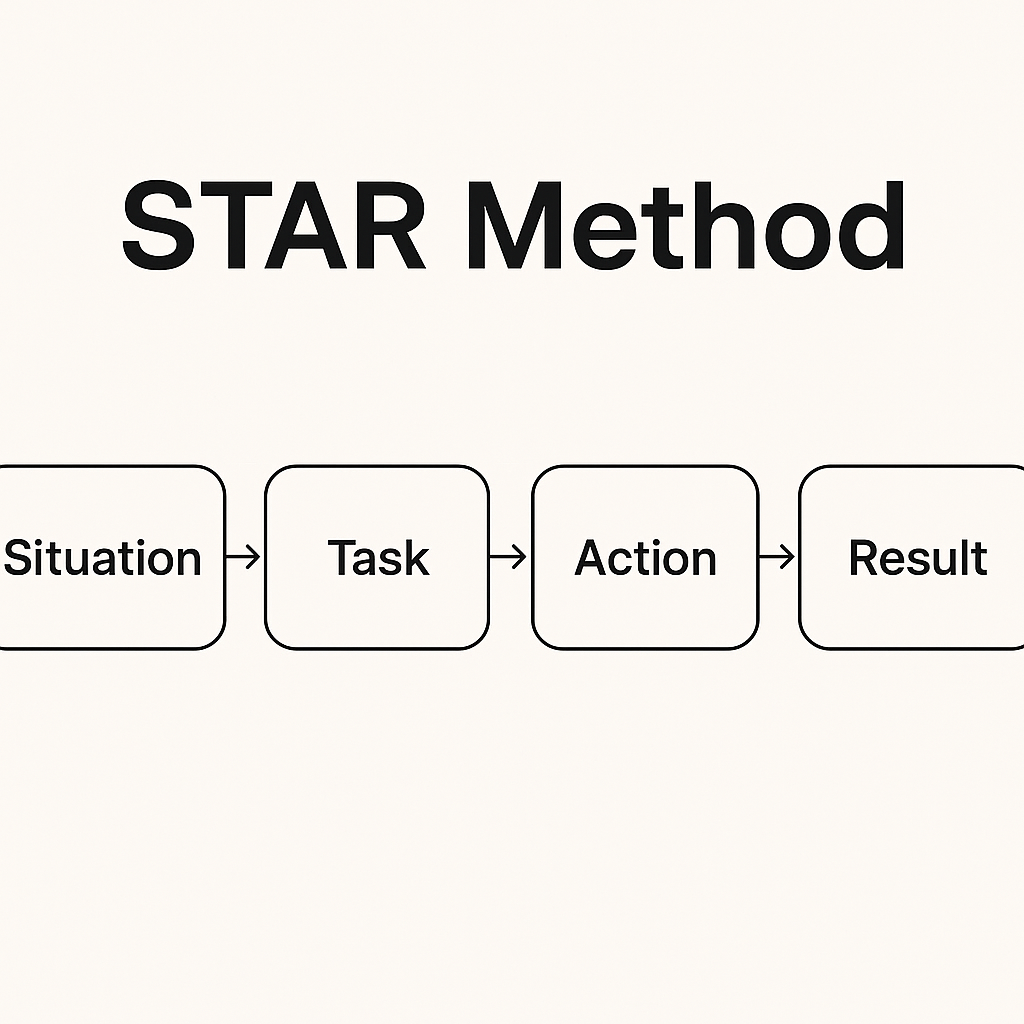
STAR stands for Situation, Task, Action, Result. In tech and SaaS interviews, hiring teams want proof that you can own problems, use data, and drive outcomes. For a clear walkthrough of the basics, you can watch this STAR Interview Technique Explained video.
The 4 Pieces Interviewers Want to Hear
| STAR Element | What Interviewers Listen For |
|---|---|
| Situation | The short context. What was happening? |
| Task | Your job. What were you responsible for? |
| Action | What you did. Use "I" and be specific. |
| Result | The result. Use numbers where possible. |
Simple Formula to Turn Any Story Into STAR
- Keep the Situation to 1-2 sentences.
- Spend most of your time on Action.
- End with 2-3 clear metrics.
- Add one short lesson if it helps.
STAR Example 1: Senior Software Engineer – Handling a Production Incident
Use this for "Tell me about a time something went wrong in production" or "Describe a major setback." For technical roles, it's helpful to see how this specifically applies during a STAR Method for Tech Interviews walkthrough.
Situation & Task
I was the lead engineer for a backend service migration. Right after rollout, our dashboards showed a sharp rise in API errors and latency on our highest-volume endpoint. I owned the service, so my job was to restore stability fast and decide whether to roll back or fix forward.
Action
- I treated it as a live incident. I pulled logs, traces, and metrics and opened a war room with the on-call SRE and key engineers.
- I reduced risk first. I rolled back the riskiest change and kept the safer updates in place.
- I reproduced the issue. In staging, we simulated production-like traffic to confirm the failure path.
- I found the root cause. The logs showed an N+1 query pattern that only broke under heavy load.
- I fixed the issue. I patched the code to batch database calls, then checked query counts and latency in staging.
- I improved the process. I added load tests to CI/CD so we could catch similar issues earlier.
Result
We recovered service in under two hours, and error rates and latency returned to baseline. The new load tests caught two similar issues in the next quarter. I learned to test performance at production scale, not just for function.
STAR Example 2: Senior Software Engineer – Fixing a Critical Bug Before Release
This is a strong answer for "Tell me about a time you found and fixed a serious bug under time pressure."
Situation & Task
Two days before our Black Friday launch, we found a bug in the checkout flow. Some card payments were failing at random. If it shipped, we would lose revenue and damage trust. My job was to find the cause, fix it safely, and keep the release on track.
Action
- I worked with QA to reproduce it. I used logs and browser traces to narrow it to a specific card issuer response.
- I found the edge case. The issue came from a third-party payment API response that our code handled badly.
- I used a safety net. I shipped the fix behind a feature flag in case we needed a quick rollback.
- I focused testing. QA and I ran targeted tests on payment and checkout paths instead of re-running every test.
- I coordinated rollout. I aligned with DevOps on the deploy plan and rollback steps.
- I kept teams informed. I sent short updates to product and marketing so they knew the launch was still on track.
Result
We fixed and deployed the bug within 24 hours. The Black Friday launch went live on time, and we handled our highest transaction volume with zero payment errors. I also added automated tests for that payment scenario.
STAR Example 3: Product Manager – Resolving Product vs Engineering Conflict
This works well for "Tell me about a time you disagreed with engineering" or "Describe a conflict and how you handled it."
Situation & Task
I was the PM for an analytics dashboard with a tight launch date. Engineering pushed back on the first scope because it was too large and could hurt performance. My job was to align the team on a scope we could ship on time without damaging trust.
Action
- I met engineers one-on-one. I listened to their concerns about database load and query complexity.
- I focused on the shared goal. I said, "We all want useful analytics without slowing the product. Let's work out the safest path."
- I set decision rules. We agreed to judge options by customer impact, technical effort, and time to market.
- I used data. I brought user research showing which analytics features mattered most.
- I proposed a phased plan. Phase 1 shipped the key features. Phase 2 handled the more complex queries after we measured performance.
- I wrote down the decision. I shared a short memo on the trade-offs and timeline.
Result
We shipped Phase 1 on time, and user engagement with analytics rose by 40%. The engineering team respected the process because I listened to their constraints. We later reused the same decision rules for other features.
STAR Example 4: Product Manager – Leading a Product Launch from Start to Finish
Situation & Task
When I joined, our onboarding flow had a 40% drop-off rate. Users signed up but did not reach the "aha" moment. I was tasked with redesigning the flow to improve activation and owning the launch end to end.
Action
- I started with the funnel. I reviewed metrics and session recordings to find where users dropped off.
- I cut scope hard. I worked with design on a simple V1 that pushed users to one key action.
- I aligned teams. I built a launch plan with engineering, design, marketing, and support, plus shared success metrics.
- I tested early. We ran a small beta, gathered feedback, and made one final change.
- I prepared go-to-market teams. I created training docs, FAQs, and a short internal brief.
- I watched the metrics daily. For two weeks after launch, I tracked activation and fixed small bugs fast.
Result
The new onboarding flow launched on schedule. Activation rose by 25% in the first month, and onboarding support tickets dropped by 15%. The biggest lesson was that a smaller MVP often wins.
STAR Example 5: SaaS Account Executive – Closing a Complex Enterprise Deal
Use this for "Tell me about a complex deal you closed" or "How do you manage multiple stakeholders?" If you are preparing for this type of high-stakes conversation, reviewing the SAAS Playbook Edition 8: Interview Prep How to Get Ready provides useful context on what enterprise hiring managers expect.
Situation & Task
I worked on a deal with a large enterprise that still used an old vendor. The deal was complex because it involved multiple teams, a skeptical IT group, and a strict procurement process. My job was to prove value, align decision-makers, and close inside the quarter.
Action
- I ran deep discovery. I spoke with end users and leaders to connect pain points to business cost.
- I mapped the account. I identified the champion, economic buyer, technical reviewers, and blockers.
- I built a business case. I used their numbers to show a six-month payback period.
- I created a mutual action plan. We listed each step from demo to security review to signature, with owners and dates.
- I kept the POC focused. We proved the top two use cases instead of trying to test everything.
- I involved security and legal early. That cut down last-minute issues.
Result
I closed $250k in ARR, or 150% of quota for that account. The sales cycle took 60 days, which was 30 days faster than our normal enterprise cycle. That deal also became a reference for three other customers in the same industry.
STAR Example 6: SaaS Account Executive – Saving a Stalled Opportunity
This is a good answer for "Tell me about a time a deal was at risk."
Situation & Task
I had a strong deal with a mid-market tech company. Then my champion went quiet. A week later, I learned there had been a leadership change and all spending was frozen. My job was to re-engage the account and save the opportunity.
Action
- I reached out with empathy. I sent a short note asking if I could help.
- I reset my research. I studied the new leader’s priorities and saw that cost reduction mattered more than innovation.
- I changed the value story. I reframed our product as a way to replace three other tools and cut cost.
- I changed the deal shape. I proposed a smaller first phase, which made the decision easier.
- I involved leadership. I set up a short call between my VP and their new department head.
Result
We closed a $60k ARR deal instead of the original $100k, but the deal stayed alive. Six months later, after we proved value, they expanded back to the full amount. I learned to adjust the message to the buyer’s current goals.
STAR Example 7: Cross-Role “Biggest Mistake” Story That Shows Real Learning
Use this for "Tell me about a time you failed" or "What is your biggest mistake?"
Situation & Task
Early in my career, I assumed a dependency from another team was on track because our project tool looked green. My job was to deliver my part of the project on time, but I did not confirm the other team’s status directly.
Action
- I owned the mistake. When I saw the delay, I told my manager right away.
- I explained the impact. I shared how the delay would affect the launch date.
- I reduced the damage. I worked with the other team to adjust scope so we could ship a simpler version on time.
- I fixed the root cause. I realized my process was the problem. I trusted a status tool instead of checking in live.
- I changed my workflow. I built a dependency checklist and now schedule a live check-in for any critical outside dependency.
Result
We launched the core feature on time with reduced scope. Since then, I have not been caught by the same kind of dependency issue again. The lesson was simple: active ownership beats passive status tracking.
Specific STAR Examples for Product Manager and SaaS Sales Roles
If you are in PM or SaaS sales, interviewers often want more technical detail, clearer metrics, and a stronger link to business outcomes.
| Role | Strong Metrics to Use |
|---|---|
| Product Manager | Activation rate, feature adoption, retention, time to first value, DAU/MAU, NRR, support ticket reduction |
| Engineering | Uptime, latency, response time, test coverage, cycle time, incident recovery time |
| SaaS Sales | ARR, ACV, conversion rate, PQL-to-opportunity rate, win rate, sales cycle length, CAC payback |
Product Manager: Technical Product Delivery Example
Situation: A new export feature was blocked by engineering because the first design would have increased system load.
Task: Deliver the feature without hurting performance or delaying a major customer deal.
Action: I ran a trade-off review, compared a fast MVP against the original design, and used usage data to confirm that 80% of users only needed one export format. I agreed to ship the smaller version first, then queued the heavier version for the next sprint.
Result: We closed the deal, launched on time, and later cut latency by 20% after the refactor.
SaaS Sales: Technical Demo and Objection Example
Situation: A prospect liked the value of our platform but worried it would be hard to integrate with their Salesforce setup.
Task: Remove the technical blocker without over-promising.
Action: I mapped our API points to their workflow, ran a short data sync review, and showed how a similar customer had deployed it successfully. I also brought in a solutions engineer for a focused demo on only their top use case.
Result: The prospect moved into a technical pilot and later signed the contract.
How to Adapt Your Own Experience Into STAR
Use this simple process if your story does not match the examples exactly.
- Pick one real outcome. Choose a project, incident, deal, or launch with a clear result.
- State the Situation in one sentence. Give just enough context.
- Name your Task. What were you personally responsible for?
- List 3-5 Actions. Use specific tools, meetings, analysis, or decisions.
- Use numbers in the Result. Good metrics include:
- Engineering: uptime, latency, error rate, test coverage, incident recovery time
- PM: activation rate, retention, feature adoption, time to first value, NRR
- Sales: ARR, ACV, win rate, conversion rate, sales cycle length
- Add one lesson. Show what you changed after that experience.
A Simple Fill-in Template
Situation: [One line of context]
Task: [Your role and goal]
Action: [3-5 specific steps you took]
Result: [2-3 numbers and one lesson]
Common Pitfalls to Avoid in Tech and SaaS STAR Answers
Phrases to Avoid
| Avoid This | Better Version |
|---|---|
| "We improved it." | "I changed X and improved Y." |
| "I just followed the process." | "I saw a gap and took ownership." |
| "I looked into it." | "I checked logs, traces, customer data, or pipeline reports." |
| "The launch was successful." | "Activation rose 25% and support tickets fell 15%." |
| "It wasn't my fault." | "I owned my part and fixed the process." |
| "I'm not very technical, but..." | Skip this and show data comfort instead. |
Extra Mistakes That Hurt in Tech Interviews
- Spending too long on background and not enough on action
- Using vague words instead of tools, metrics, or decisions
- Sounding like you are reading a script
- Giving only activity, with no measurable result
- Using "strategic" or "big-picture" without proof
- Over-claiming success without explaining your role
Why You Can Trust These STAR Interview Examples
These examples reflect common behavioral interview patterns used in tech and SaaS hiring. They focus on ownership, technical depth, business impact, and clear results. If you want to do well, pick one story today and turn it into your own version.
Frequently Asked Questions
What is the STAR method in a tech interview?
The STAR method is a framework for answering behavioral questions. It stands for Situation, Task, Action, Result. It helps you tell a clear story with your own impact and measurable results.
What is the 30-60-90 rule in an interview?
A 30-60-90 day plan is a simple outline of what you would do in your first three months in a role. It is common in sales, marketing, and leadership interviews.
What is your 3 weaknesses' best answer?
Choose a real weakness, show how you are improving it, and explain the result. For example: "I used to delegate too late. Now I assign work earlier and track it in a project tool."
What is the 80 20 rule for interviews?
It means you should speak most of the time. The interviewer should ask questions, while you give clear, focused answers.
When to Get Extra Help: Practicing STAR Answers With a Coach
Knowing the STAR method is easy. Sounding clear and confident under pressure is harder. If you want feedback on your stories before a big interview, consider booking focused interview coaching to rehearse with an expert.